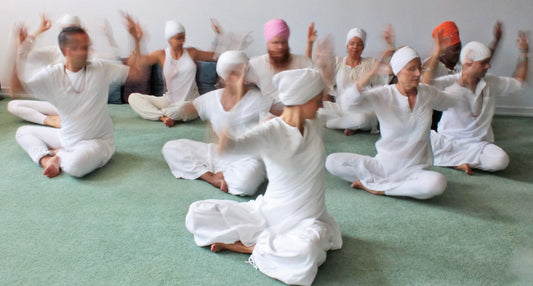
Kundalini yoga is often described as a dynamic practice, but this is only part of the picture. Some say Kundalini classes are like a 'box of chocolates' - you never know what you are going to get.
Some kriyas involve movement and breathwork, while others are almost entirely still, involving:
- long meditations
- static postures
- subtle breath awareness
- and minimal physical movement
The experience can vary significantly depending on the teacher and the specific practice being used.
However, the key feature is not how active the body is—it is the structured nature of the practice itself.
Even very still practices are typically:
- named
- timed
- and composed of specific techniques (mudra, breath, focus, mantra)
This gives them a defined shape, even when outward activity is minimal.
This differs from more adaptive traditions where practices may evolve gradually over time or be simplified rather than combined into structured sequences.
Both approaches can be valuable. The main difference is in how the practice is organised and transmitted.
For those exploring Kundalini yoga, the most useful question is often not “Is it dynamic?” but rather:
“Do I prefer structured, guided practices or more open-ended approaches?”
Tags:
Previous
Sikh Elements in Kundalini Yoga | How Did They Get There?
Next
Why Wear White for Kundalini Practice? | Meaning, Benefits & Tradition
Related articles
-
Sep 18 2026
Why Do We Cover the Head in Kundalini Yoga?

-
Jun 25 2026
Your Sadhana, Your Personal Practice

-
Jun 25 2026
Transformation & Personal Growth

-
Jun 25 2026
Opening the Heart

-
Jun 25 2026
Grounding During Times of Uncertainty

-
Jun 25 2026
New Beginnings & Fresh Directions

-
Jun 25 2026