Modern Kundalini yoga often includes chanting such as:
- Sat Nam
- Wahe Guru
These phrases come from Sikh tradition and are not part of classical yogic texts.
The inclusion of some Sikh elements reflects the background of Yogi Bhajan, who was raised in a Punjabi Sikh environment. When he began teaching in the West, he introduced yoga alongside broader spiritual and devotional context.
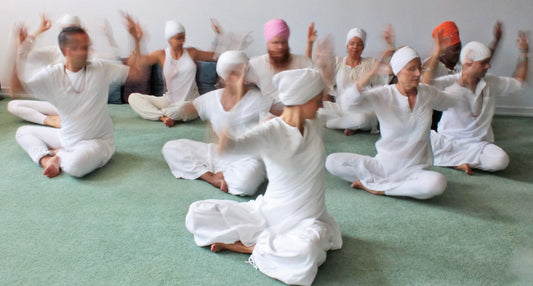
Over time, this developed into a lifestyle system supported by communities such as 3HO whose mission is to inspire everyone, everywhere to live a Healthy, Happy, and Holy life.
Within this system:
- chanting became a central practice
- Sikh terminology was widely used
- and group identity was reinforced through shared rituals and language
It is important to note that Sikhism itself does not traditionally include Kundalini yoga as a system of physical postures and breathwork. The combination seen in modern Kundalini yoga is therefore a contemporary synthesis, rather than a historical continuity.
For practitioners, these Sikh elements usually feel devotional and grounding. However, depending on background there is often a sense of unfamiliarity, yet the benefits of the inclusion of these elements without a doubt deepen the class experience for everyone.
Understanding their origin helps clarify what is being practised and why certain sounds, phrases, and rituals are present.
Tags:
Previous
How the Description of the Kriya Shapes Your Experience?
Next
Still vs. Dynamic | Or Is It Both?
Related articles
-
Sep 18 2026
Why Do We Cover the Head in Kundalini Yoga?

-
Jun 25 2026
Your Sadhana, Your Personal Practice

-
Jun 25 2026
Transformation & Personal Growth

-
Jun 25 2026
Opening the Heart

-
Jun 25 2026
Grounding During Times of Uncertainty

-
Jun 25 2026
New Beginnings & Fresh Directions

-
Jun 25 2026