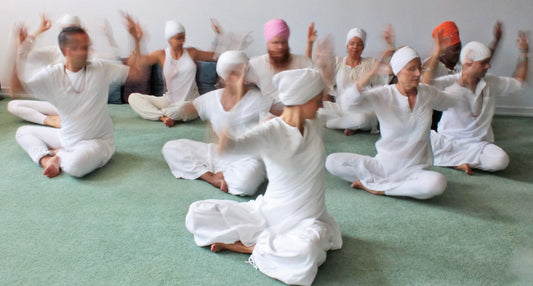
If you’ve attended a Kundalini yoga class, you’ll likely have noticed that it feels highly structured, very methodical.
There is usually:
- a defined opening
- a specific sequence of exercises ('kriya')
- set timings (e.g. 3, 11, or 31 minutes)
- relaxation after the kriya
- and a closing practice
This structure comes from how the system was developed and later documented.
In the early years of teaching in the West, the teachings of Yogi Bhajan were delivered in live classes. Over time, these sessions were recorded and organised into written formats. Figures such as Gurucharan Singh Khalsa played an important role in documenting and structuring these teachings into teachable sequences.
This process created what we now recognise as kriyas:
- named practices
- fixed sequences
- clear instructions
- and defined durations
This approach makes the system:
- easy to learn
- consistent across teachers
- and repeatable in group settings
It also creates a sense of clarity: you know exactly what to do and for how long.
For those wanting to experience this structured approach directly, classes typically follow this format in real time and can be explored through beginner-friendly sessions - do explore your local Kundalini yoga studios, and online classes.
Tags:
Previous
What Is 'Kundalini Yoga' Today?
Next
How the Description of the Kriya Shapes Your Experience?
Related articles
-
Sep 18 2026
Why Do We Cover the Head in Kundalini Yoga?

-
Jun 25 2026
Your Sadhana, Your Personal Practice

-
Jun 25 2026
Transformation & Personal Growth

-
Jun 25 2026
Opening the Heart

-
Jun 25 2026
Grounding During Times of Uncertainty

-
Jun 25 2026
New Beginnings & Fresh Directions

-
Jun 25 2026