If you've ever attended a Kundalini Yoga class, you've probably noticed the abundance of white clothing. For newcomers, this often raises an obvious question: is wearing white simply a tradition, or does it actually make a difference to the practice?
The answer depends on how you view yoga itself. For many practitioners, white clothing carries both symbolic and practical significance.
The Symbolism of White
Across many cultures and spiritual traditions, white is associated with purity, clarity, openness, and light.
In Kundalini Yoga, wearing white is said to represent a commitment to self-awareness and conscious living. It can serve as a reminder to approach practice with a clear mind and an open heart.
Much like lighting a candle before meditation or removing shoes before entering a sacred space, wearing white can become part of a ritual that signals a shift from everyday concerns into a more mindful state.
The Practical Perspective
Even if you set symbolism aside, white clothing offers practical benefits.
White reflects sunlight rather than absorbing it, helping keep the body cooler in warm conditions. White garments also tend to reveal perspiration less dramatically than some darker synthetic fabrics, particularly when made from breathable natural fibres.
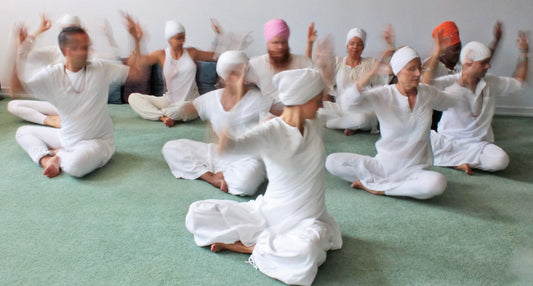
For group practice, a room filled with white clothing can create a sense of calm, uniformity, and collective focus.
The Energetic Perspective
Traditional Kundalini teachings suggest that white strengthens and expands the body's energetic field, sometimes referred to as the aura.
While this idea falls outside the scope of conventional science, many practitioners report feeling uplifted, focused, or more aware when practising in white clothing. Whether this is due to energetic effects, psychological associations, or simply personal preference is something each individual can explore for themselves.
Does It Matter
The good news is that Kundalini Yoga is not dependent on what colour you wear.
Many people begin practising in whatever comfortable clothing they already own. Over time, some choose to wear white because they enjoy the tradition, appreciate the symbolism, or simply like how it feels during practice.
Ultimately, white clothing is best viewed as a tool rather than a requirement. If it enhances your experience, use it. If it doesn't, your practice can still be meaningful and transformative.
The real purpose of yoga remains the same: cultivating awareness, presence, and connection with yourself.
Tags:
Previous
Loose vs Fitted: What Works Best for Practice?
Next
Does Clothing Really Affect Your Energy or Experience?
Related articles
-
Sep 18 2026
Why Do We Cover the Head in Kundalini Yoga?
-
Jun 25 2026
Your Sadhana, Your Personal Practice

-
Jun 25 2026
Transformation & Personal Growth

-
Jun 25 2026
Opening the Heart

-
Jun 25 2026
Grounding During Times of Uncertainty

-
Jun 25 2026
New Beginnings & Fresh Directions
-
Jun 25 2026