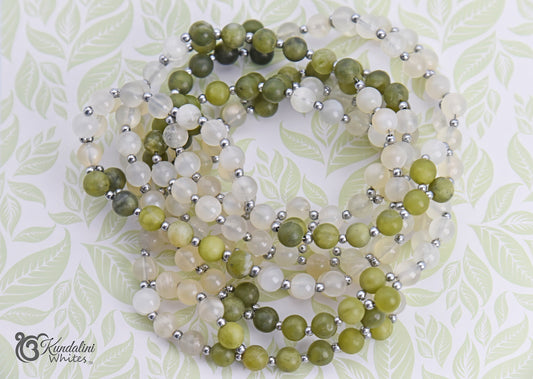
A personal practice does not need to be elaborate to be meaningful.
For some, it is structured and consistent — a set time each day dedicated to meditation, mantra, or reflection. For others, it is quieter and more fluid, appearing in small pauses throughout ordinary life.
What matters is not the form it takes, but the continuity of presence it creates.
Practice as relationship, not routine
Over time, a personal practice becomes less about discipline in the conventional sense and more about relationship.
It is a way of returning to yourself — not to fix or change anything, but to stay connected to your inner world amidst the movement of daily life.
Some days this connection feels clear and steady. Other days it feels subtle or distant.
Both are part of the practice.
A mala in this context is often used not as a tool for achievement, but as a gentle support for returning attention inward.
Different rhythms, different seasons
There is no single correct way to maintain a personal practice.
Some seasons invite depth, structure, and repetition. Others ask for simplicity, flexibility, and ease.
What remains constant is the intention to stay in relationship with yourself, even in small ways.
A mala may be used during formal meditation, or simply held during quiet moments of reflection. It may also sit nearby as a physical reminder of stillness, clarity, or awareness.
Its role is not to define the practice, but to accompany it.
Integration into everyday life
A personal practice does not need to be separated from daily life.
It can exist alongside work, relationships, movement, and rest — woven into the edges of ordinary experience.
Over time, these small moments of return create continuity.
Not through intensity, but through consistency.
In this way, a mala becomes part of lived rhythm — something that supports awareness without demanding attention.
Associated mala archetypes
Within this practice-oriented theme, the following mala archetypes are often explored:
- The Mystic — associated with inner awareness, intuition, and contemplative presence
- The Scholar — associated with focus, clarity of thought, and understanding
- The Clarifier — associated with simplicity, mental order, and easing distraction
Each mala archetype reflects a different relationship with practice — depth, understanding, and clarity.
They are not stages or levels, but different ways of engaging with awareness.
A steady companion in practice
In a personal practice, a mala is not something to achieve with.
It is something to return to.
Sometimes it supports meditation. Sometimes it simply rests nearby as a reminder of intention. Sometimes it is held without any structured purpose at all.
Its presence becomes part of the rhythm rather than the focus itself.
Explore further
If you would like to explore how personal practice relates to life transitions and archetypes, you may find these helpful:
👉 Life Phases and Mala Archetypes: Finding What Resonates With You
👉 How to Choose a Mala for Life’s Seasons and Transitions
Featured mala archetypes from this theme
Within this practice and clarity-focused energy, you may wish to explore malas such as:
- Amethyst & White Agate — The Mystic
- Sodalite & Clear Quartz — The Scholar
- Fluorite & White Agate — The Clarifier
Tags:
Related articles
-
Sep 18 2026
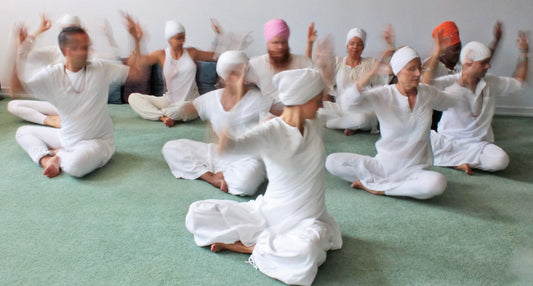
Why Do We Cover the Head in Kundalini Yoga?
-
Jun 25 2026
Transformation & Personal Growth

-
Jun 25 2026
Opening the Heart
-
Jun 25 2026
Grounding During Times of Uncertainty

-
Jun 25 2026
New Beginnings & Fresh Directions
-
Jun 25 2026