Uncertainty has a particular weight to it.
It is not always dramatic or obvious. Sometimes it appears as mental noise, difficulty making decisions, or a sense that things are shifting without clear structure or direction.
In these periods, the mind often tries to resolve discomfort by thinking more, planning more, or searching for clarity before it is ready to arrive.
Yet clarity does not always come from more information.
Sometimes it comes from less.
When everything feels like too much at once
There are moments in life when external demands, emotional processing, and internal reflection all seem to happen simultaneously.
In these states, even simple decisions can feel heavier than usual.
This is often when people begin to return to grounding practices — not to change what is happening externally, but to create enough internal steadiness to meet it with more ease.
A mala in this context is often not about intention-setting or forward direction. Instead, it becomes something quieter.
Something tactile. Something repetitive. Something that brings attention back into the present moment.
Finding steadiness again
Grounding is rarely a single shift. It tends to happen gradually through repetition, rhythm, and small acts of stability.
This might look like slowing down routines, simplifying choices, or returning to practices that feel familiar and steadying.
In this space, a mala may be used as part of a quiet practice — a way of returning attention to breath, sensation, or presence when the mind becomes scattered or overwhelmed.
Rather than offering direction, it supports stillness long enough for direction to eventually reappear on its own.
Creating internal space again
As overwhelm begins to settle, there is often a return of internal space.
Thoughts feel less entangled. Emotions feel more manageable. The nervous system begins to soften from alertness into something more balanced.
This is not about forcing calm. It is about allowing conditions where calm can naturally re-emerge.
In these moments, people often find themselves drawn toward simplicity — in environment, in thought, and in the symbolic tools they choose to keep close.
A mala may become part of that simplicity. Not as something to solve a state of mind, but as something that supports a return to it.
Associated mala archetypes
Within this grounding theme, the following mala archetypes are often explored:
- The Pathfinder — associated with protection, resilience, and navigating uncertainty with steadiness
- The Harmoniser — associated with balance, emotional regulation, and restoring inner equilibrium
- The Clarifier — associated with mental clarity, simplification, and easing overwhelm
Each mala archetype reflects a different aspect of grounding — physical, emotional, and cognitive.
They are not prescriptions, but reference points for recognising what kind of steadiness feels most needed right now.
A quieter way of working with a mala
Some people use a mala during meditation or breathwork. Others simply keep it nearby as a tactile reminder to slow down.
In times of uncertainty, its presence can act less as a spiritual tool and more as a stabilising object — something familiar to return to when everything feels less certain than usual.
There is no right way to engage with it.
Only what helps bring you back to yourself.
Explore further
If you would like to understand how grounding fits within broader life transitions, you may find this guide helpful:
👉 Life Phases and Mala Archetypes: Finding What Resonates With You
For a wider perspective on choosing a mala during different life stages, you may also like:
👉 How to Choose a Mala for Life’s Seasons and Transitions
Featured mala archetypes from this theme
Within this grounding energy, you may wish to explore malas associated with stability, clarity, and emotional balance, including:
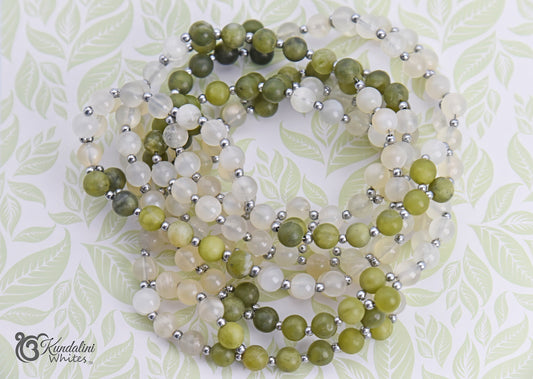
- White Agate & Labradorite — The Pathfinder
- Green Jade & Moonstone — The Harmoniser
- Fluorite & White Agate — The Clarifier
Tags:
Related articles
-
Sep 18 2026
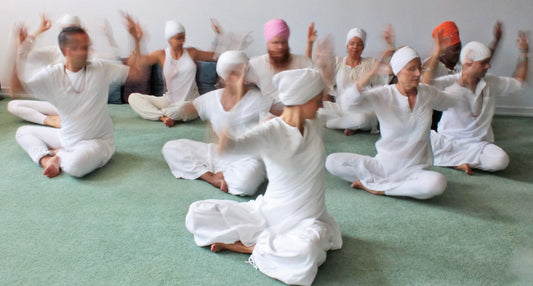
Why Do We Cover the Head in Kundalini Yoga?
-
Jun 25 2026
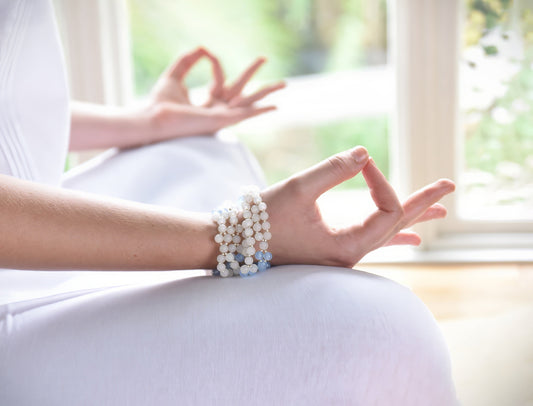
Your Sadhana, Your Personal Practice
-
Jun 25 2026
Transformation & Personal Growth

-
Jun 25 2026
Opening the Heart

-
Jun 25 2026
New Beginnings & Fresh Directions
-
Jun 25 2026